•  
Japanese startup Space One's 3rd rocket flight aborted

Japanese startup Space One's 3rd rocket flight aborted

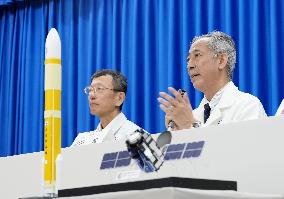
President Masakazu Toyoda of Space One Co. grimaces during a press conference in Kushimoto in Wakayama Prefecture, western Japan, on March 5, 2026, after the Japanese startup aborted the flight of its Kairos No. 3 rocket. The company was hoping to be the first Japanese private entity to put a satellite into orbit.

  •  
Japanese startup Space One's 3rd rocket flight aborted

Japanese startup Space One's 3rd rocket flight aborted

President Masakazu Toyoda of Space One Co. speaks at a press conference in Kushimoto in Wakayama Prefecture, western Japan, on March 5, 2026, after the Japanese startup aborted the flight of its Kairos No. 3 rocket following previous two failed attempts. The company was hoping to be the first Japanese private entity to put a satellite into orbit.

  •  
Japanese startup Space One's 3rd rocket flight aborted

Japanese startup Space One's 3rd rocket flight aborted

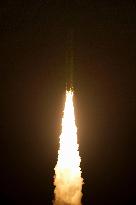
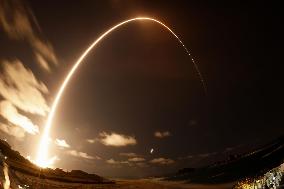
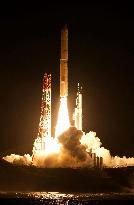
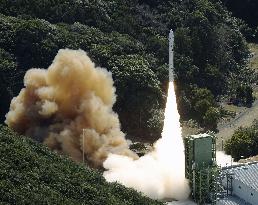
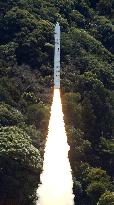
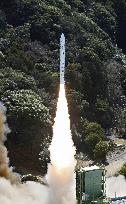
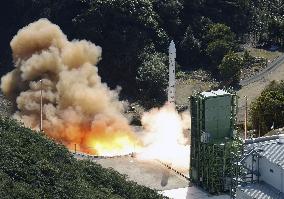
Photo taken from a Kyodo News helicopter shows the Kairos No. 3 rocket of Japanese startup Space One Co. lifting off from Space Port Kii in Kushimoto in Wakayama Prefecture, western Japan, on March 5, 2026. The company's bid to become the first private firm in the country to put a satellite into orbit failed, however, following two previous failed attempts.

  •  
Japanese startup Space One's 3rd rocket flight aborted

Japanese startup Space One's 3rd rocket flight aborted

Photo taken from a Kyodo News helicopter shows the Kairos No. 3 rocket of Japanese startup Space One Co. lifting off from Space Port Kii in Kushimoto in Wakayama Prefecture, western Japan, on March 5, 2026. The company's bid to become the first private firm in the country to put a satellite into orbit failed, however, following two previous failed attempts.

  •  
Japanese startup Space One's 3rd rocket flight aborted

Japanese startup Space One's 3rd rocket flight aborted

Photo taken from a Kyodo News helicopter shows the Kairos No. 3 rocket of Japanese startup Space One Co. lifting off from Space Port Kii in Kushimoto in Wakayama Prefecture, western Japan, on March 5, 2026. The company's bid to become the first private firm in the country to put a satellite into orbit failed, however, following two previous failed attempts.

  •  
Japanese startup Space One's 3rd rocket flight aborted

Japanese startup Space One's 3rd rocket flight aborted

Photo taken from a Kyodo News helicopter shows the Kairos No. 3 rocket of Japanese startup Space One Co. lifting off from Space Port Kii in Kushimoto in Wakayama Prefecture, western Japan, on March 5, 2026. The company's bid to become the first private firm in the country to put a satellite into orbit failed, however, following two previous failed attempts.

  •  
Japanese startup Space One's 3rd rocket flight aborted

Japanese startup Space One's 3rd rocket flight aborted

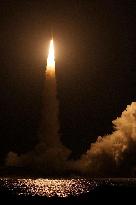
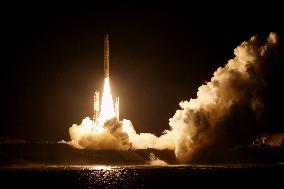
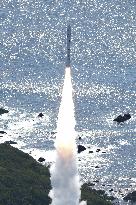
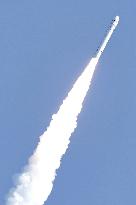
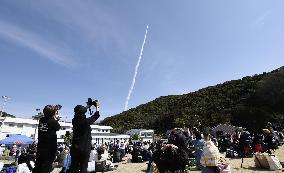
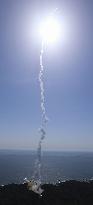
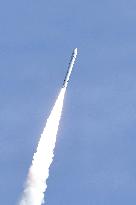
The Kairos No. 3 rocket of Japanese startup Space One Co. soars after its liftoff from Space Port Kii in Kushimoto in Wakayama Prefecture, western Japan, on March 5, 2026. The company's bid to become the first private firm in the country to put a satellite into orbit failed, however, following two previous failed attempts.

  •  
Japanese startup Space One's 3rd rocket flight aborted

Japanese startup Space One's 3rd rocket flight aborted

The Kairos No. 3 rocket of Japanese startup Space One Co. soars after its liftoff from Space Port Kii in Kushimoto in Wakayama Prefecture, western Japan, on March 5, 2026. The company's bid to become the first private firm in the country to put a satellite into orbit failed, however, following two previous failed attempts.

  •  
Japanese startup Space One's 3rd rocket flight aborted

Japanese startup Space One's 3rd rocket flight aborted

The Kairos No. 3 rocket of Japanese startup Space One Co. soars after its liftoff from Space Port Kii in Kushimoto in Wakayama Prefecture, western Japan, on March 5, 2026. The company's bid to become the first private firm in the country to put a satellite into orbit failed, however, following two previous failed attempts.

  •  
Japanese startup Space One's 3rd rocket flight aborted

Japanese startup Space One's 3rd rocket flight aborted

Photo taken from a Kyodo News helicopter shows the Kairos No. 3 rocket of Japanese startup Space One Co. soaring after its liftoff from Space Port Kii in Kushimoto in Wakayama Prefecture, western Japan, on March 5, 2026. The company's bid to become the first private firm in the country to put a satellite into orbit failed, however, following two previous failed attempts.

  •  
Japanese startup Space One's 3rd rocket flight aborted

Japanese startup Space One's 3rd rocket flight aborted

Photo taken from a Kyodo News helicopter shows the Kairos No. 3 rocket of Japanese startup Space One Co. lifting off from Space Port Kii in Kushimoto in Wakayama Prefecture, western Japan, on March 5, 2026. The company's bid to become the first private firm in the country to put a satellite into orbit failed, however, following two previous failed attempts.

  •  
Japanese startup Space One's 3rd rocket flight aborted

Japanese startup Space One's 3rd rocket flight aborted

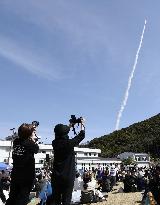
The Kairos No. 3 rocket of Japanese startup Space One Co. soars after its liftoff from Space Port Kii in Kushimoto in Wakayama Prefecture, western Japan, on March 5, 2026. The company's bid to become the first private firm in the country to put a satellite into orbit failed, however, following two previous failed attempts.

  •  
Japanese startup Space One's 3rd rocket flight aborted

Japanese startup Space One's 3rd rocket flight aborted

Photo taken from a Kyodo News helicopter shows the Kairos No. 3 rocket of Japanese startup Space One Co. lifting off from Space Port Kii in Kushimoto in Wakayama Prefecture, western Japan, on March 5, 2026. The company's bid to become the first private firm in the country to put a satellite into orbit failed, however, following two previous failed attempts.

  •  
Lake Urmia Environmental Disaster - Iran

Lake Urmia Environmental Disaster - Iran

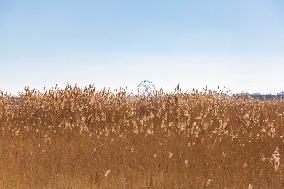
A view shows dry reeds on the dry bed of Lake Urmia in northwestern Iran on December 20, 2025. Lake Urmia, once the largest lake in the Middle East, has dramatically shrunk due to prolonged drought, the damming of rivers feeding the lake, and extensive groundwater extraction in the surrounding area. Although increased rainfall and water diversion briefly helped restore water levels in 2019, renewed drought and administrative mismanagement in the early 2020s reversed the trend, and satellite imagery shows the lake has almost entirely dried up by September 2025. Photo by Morteza Aminoroayayi/Middle East Images/ABACAPRESS.COM

  •  
Lake Urmia Environmental Disaster - Iran

Lake Urmia Environmental Disaster - Iran

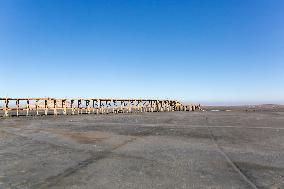
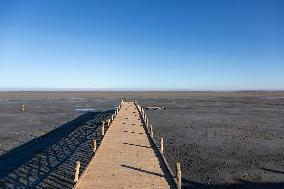
A view shows a wooden pier on the dry bed of Lake Urmia in northwestern Iran on December 20, 2025. Lake Urmia, once the largest lake in the Middle East, has dramatically shrunk due to prolonged drought, the damming of rivers feeding the lake, and extensive groundwater extraction in the surrounding area. Although increased rainfall and water diversion briefly helped restore water levels in 2019, renewed drought and administrative mismanagement in the early 2020s reversed the trend, and satellite imagery shows the lake has almost entirely dried up by September 2025. Photo by Morteza Aminoroayayi/Middle East Images/ABACAPRESS.COM

  •  
Lake Urmia Environmental Disaster - Iran

Lake Urmia Environmental Disaster - Iran

A view shows a wooden pier on the dry bed of Lake Urmia in northwestern Iran on December 20, 2025. Lake Urmia, once the largest lake in the Middle East, has dramatically shrunk due to prolonged drought, the damming of rivers feeding the lake, and extensive groundwater extraction in the surrounding area. Although increased rainfall and water diversion briefly helped restore water levels in 2019, renewed drought and administrative mismanagement in the early 2020s reversed the trend, and satellite imagery shows the lake has almost entirely dried up by September 2025. Photo by Morteza Aminoroayayi/Middle East Images/ABACAPRESS.COM

  •  
Lake Urmia Environmental Disaster - Iran

Lake Urmia Environmental Disaster - Iran

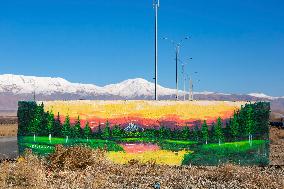
A view shows a mural depicting a landscape painted on a concrete wall near Sharafkhaneh port at Lake Urmia in northwestern Iran on December 19, 2025. Lake Urmia, once the largest lake in the Middle East, has dramatically shrunk due to prolonged drought, the damming of rivers feeding the lake, and extensive groundwater extraction in the surrounding area. Although increased rainfall and water diversion briefly helped restore water levels in 2019, renewed drought and administrative mismanagement in the early 2020s reversed the trend, and satellite imagery shows the lake has almost entirely dried up by September 2025. Photo by Morteza Aminoroayayi/Middle East Images/ABACAPRESS.COM

  •  
Lake Urmia Environmental Disaster - Iran

Lake Urmia Environmental Disaster - Iran

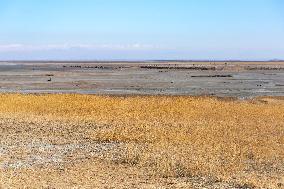
A view shows dry grass and the dry bed of Lake Urmia in northwestern Iran on December 20, 2025. Lake Urmia, once the largest lake in the Middle East, has dramatically shrunk due to prolonged drought, the damming of rivers feeding the lake, and extensive groundwater extraction in the surrounding area. Although increased rainfall and water diversion briefly helped restore water levels in 2019, renewed drought and administrative mismanagement in the early 2020s reversed the trend, and satellite imagery shows the lake has almost entirely dried up by September 2025. Photo by Morteza Aminoroayayi/Middle East Images/ABACAPRESS.COM

  •  
Lake Urmia Environmental Disaster - Iran

Lake Urmia Environmental Disaster - Iran

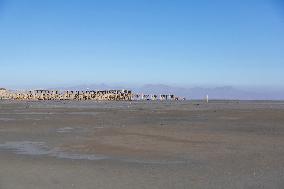
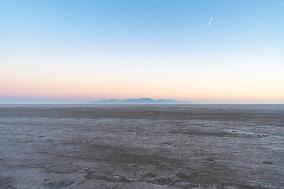
A view shows the dry bed of Lake Urmia in northwestern Iran on December 19, 2025. Lake Urmia, once the largest lake in the Middle East, has dramatically shrunk due to prolonged drought, the damming of rivers feeding the lake, and extensive groundwater extraction in the surrounding area. Although increased rainfall and water diversion briefly helped restore water levels in 2019, renewed drought and administrative mismanagement in the early 2020s reversed the trend, and satellite imagery shows the lake has almost entirely dried up by September 2025. Photo by Morteza Aminoroayayi/Middle East Images/ABACAPRESS.COM

  •  
Lake Urmia Environmental Disaster - Iran

Lake Urmia Environmental Disaster - Iran

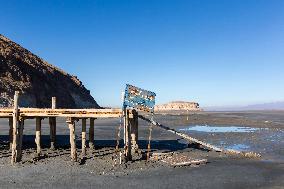
A view shows a rusty sign next to a wooden pier on the dry bed of Lake Urmia in northwestern Iran on December 20, 2025. Lake Urmia, once the largest lake in the Middle East, has dramatically shrunk due to prolonged drought, the damming of rivers feeding the lake, and extensive groundwater extraction in the surrounding area. Although increased rainfall and water diversion briefly helped restore water levels in 2019, renewed drought and administrative mismanagement in the early 2020s reversed the trend, and satellite imagery shows the lake has almost entirely dried up by September 2025. Photo by Morteza Aminoroayayi/Middle East Images/ABACAPRESS.COM

  •  
Lake Urmia Environmental Disaster - Iran

Lake Urmia Environmental Disaster - Iran

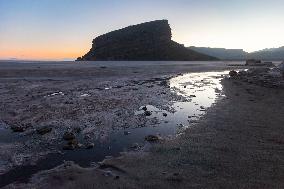
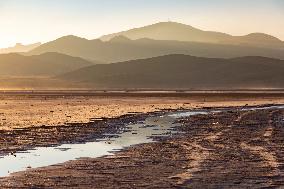
A view shows a shallow stream near a rocky cliff on the bed of Lake Urmia in northwestern Iran on December 19, 2025. Lake Urmia, once the largest lake in the Middle East, has dramatically shrunk due to prolonged drought, the damming of rivers feeding the lake, and extensive groundwater extraction in the surrounding area. Although increased rainfall and water diversion briefly helped restore water levels in 2019, renewed drought and administrative mismanagement in the early 2020s reversed the trend, and satellite imagery shows the lake has almost entirely dried up by September 2025. Photo by Morteza Aminoroayayi/Middle East Images/ABACAPRESS.COM

  •  
Lake Urmia Environmental Disaster - Iran

Lake Urmia Environmental Disaster - Iran

A view shows a wooden pier on the dry bed of Lake Urmia in northwestern Iran on December 20, 2025. Lake Urmia, once the largest lake in the Middle East, has dramatically shrunk due to prolonged drought, the damming of rivers feeding the lake, and extensive groundwater extraction in the surrounding area. Although increased rainfall and water diversion briefly helped restore water levels in 2019, renewed drought and administrative mismanagement in the early 2020s reversed the trend, and satellite imagery shows the lake has almost entirely dried up by September 2025. Photo by Morteza Aminoroayayi/Middle East Images/ABACAPRESS.COM

  •  
Lake Urmia Environmental Disaster - Iran

Lake Urmia Environmental Disaster - Iran

A view shows tire tracks running alongside a shallow stream on the bed of Lake Urmia in northwestern Iran on December 19, 2025. Lake Urmia, once the largest lake in the Middle East, has dramatically shrunk due to prolonged drought, the damming of rivers feeding the lake, and extensive groundwater extraction in the surrounding area. Although increased rainfall and water diversion briefly helped restore water levels in 2019, renewed drought and administrative mismanagement in the early 2020s reversed the trend, and satellite imagery shows the lake has almost entirely dried up by September 2025. Photo by Morteza Aminoroayayi/Middle East Images/ABACAPRESS.COM

  •  
Lake Urmia Environmental Disaster - Iran

Lake Urmia Environmental Disaster - Iran

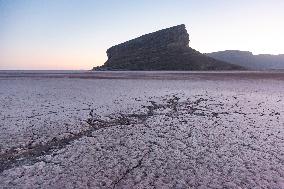
Salt formations cover the cracked surface of the dried bed of Lake Urmia in northwestern Iran on December 19, 2025. Lake Urmia, once the largest lake in the Middle East, has dramatically shrunk due to prolonged drought, the damming of rivers feeding the lake and extensive groundwater extraction in the surrounding area. Although increased rainfall and water diversion briefly helped restore water levels in 2019, renewed drought and administrative mismanagement in the early 2020s reversed the trend, and satellite imagery shows the lake has almost entirely dried up by September 2025. Photo by Morteza Aminoroayayi/Middle East Images/ABACAPRESS.COM

  •  
Lake Urmia Environmental Disaster - Iran

Lake Urmia Environmental Disaster - Iran

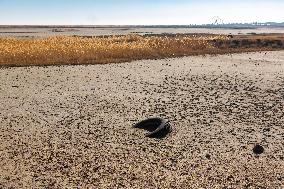
A discarded tire sits near dry reeds on the dry bed of Lake Urmia in northwestern Iran on December 20, 2025. Lake Urmia, once the largest lake in the Middle East, has dramatically shrunk due to prolonged drought, the damming of rivers feeding the lake, and extensive groundwater extraction in the surrounding area. Although increased rainfall and water diversion briefly helped restore water levels in 2019, renewed drought and administrative mismanagement in the early 2020s reversed the trend, and satellite imagery shows the lake has almost entirely dried up by September 2025. Photo by Morteza Aminoroayayi/Middle East Images/ABACAPRESS.COM

  •  
Lake Urmia Environmental Disaster - Iran

Lake Urmia Environmental Disaster - Iran

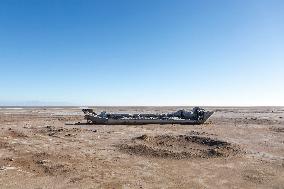
Remnants of a boat sit on the dry bed of Lake Urmia in northwestern Iran on December 19, 2025. Lake Urmia, once the largest lake in the Middle East, has dramatically shrunk due to prolonged drought, the damming of rivers feeding the lake, and extensive groundwater extraction in the surrounding area. Although increased rainfall and water diversion briefly helped restore water levels in 2019, renewed drought and administrative mismanagement in the early 2020s reversed the trend, and satellite imagery shows the lake has almost entirely dried up by September 2025. Photo by Morteza Aminoroayayi/Middle East Images/ABACAPRESS.COM

  •  
Lake Urmia Environmental Disaster - Iran

Lake Urmia Environmental Disaster - Iran

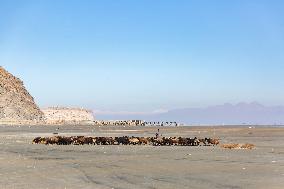
A shepherd guides a flock of sheep on the dry bed of Lake Urmia in northwestern Iran on December 20, 2025. Lake Urmia, once the largest lake in the Middle East, has dramatically shrunk due to prolonged drought, the damming of rivers feeding the lake, and extensive groundwater extraction in the surrounding area. Although increased rainfall and water diversion briefly helped restore water levels in 2019, renewed drought and administrative mismanagement in the early 2020s reversed the trend, and satellite imagery shows the lake has almost entirely dried up by September 2025. Photo by Morteza Aminoroayayi/Middle East Images/ABACAPRESS.COM

  •  
Lake Urmia Environmental Disaster - Iran

Lake Urmia Environmental Disaster - Iran

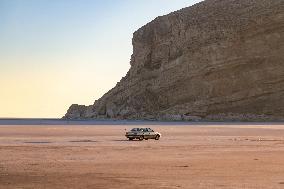
A car drives near a rocky cliff on the dry bed of Lake Urmia in northwestern Iran on December 19, 2025. Lake Urmia, once the largest lake in the Middle East, has dramatically shrunk due to prolonged drought, the damming of rivers feeding the lake, and extensive groundwater extraction in the surrounding area. Although increased rainfall and water diversion briefly helped restore water levels in 2019, renewed drought and administrative mismanagement in the early 2020s reversed the trend, and satellite imagery shows the lake has almost entirely dried up by September 2025. Photo by Morteza Aminoroayayi/Middle East Images/ABACAPRESS.COM

  •  
Lake Urmia Environmental Disaster - Iran

Lake Urmia Environmental Disaster - Iran

A rusty boat sits next to a road near Lake Urmia in northwestern Iran on December 20, 2025. Lake Urmia, once the largest lake in the Middle East, has dramatically shrunk due to prolonged drought, the damming of rivers feeding the lake, and extensive groundwater extraction in the surrounding area. Although increased rainfall and water diversion briefly helped restore water levels in 2019, renewed drought and administrative mismanagement in the early 2020s reversed the trend, and satellite imagery shows the lake has almost entirely dried up by September 2025. Photo by Morteza Aminoroayayi/Middle East Images/ABACAPRESS.COM

  •  
Lake Urmia Environmental Disaster - Iran

Lake Urmia Environmental Disaster - Iran

A view shows a wooden pier on the dry bed of Lake Urmia in northwestern Iran on December 19, 2025. Lake Urmia, once the largest lake in the Middle East, has dramatically shrunk due to prolonged drought, the damming of rivers feeding the lake, and extensive groundwater extraction in the surrounding area. Although increased rainfall and water diversion briefly helped restore water levels in 2019, renewed drought and administrative mismanagement in the early 2020s reversed the trend, and satellite imagery shows the lake has almost entirely dried up by September 2025. Photo by Morteza Aminoroayayi/Middle East Images/ABACAPRESS.COM

  •  
Lake Urmia Environmental Disaster - Iran

Lake Urmia Environmental Disaster - Iran

A man and two children stand near a car and a rocky cliff on the dry bed of Lake Urmia in northwestern Iran on December 19, 2025. Lake Urmia, once the largest lake in the Middle East, has dramatically shrunk due to prolonged drought, the damming of rivers feeding the lake, and extensive groundwater extraction in the surrounding area. Although increased rainfall and water diversion briefly helped restore water levels in 2019, renewed drought and administrative mismanagement in the early 2020s reversed the trend, and satellite imagery shows the lake has almost entirely dried up by September 2025. Photo by Morteza Aminoroayayi/Middle East Images/ABACAPRESS.COM

  •  
Lake Urmia Environmental Disaster - Iran

Lake Urmia Environmental Disaster - Iran

A view shows rows of wooden posts protruding from the dry bed of Lake Urmia in northwestern Iran on December 20, 2025. Lake Urmia, once the largest lake in the Middle East, has dramatically shrunk due to prolonged drought, the damming of rivers feeding the lake, and extensive groundwater extraction in the surrounding area. Although increased rainfall and water diversion briefly helped restore water levels in 2019, renewed drought and administrative mismanagement in the early 2020s reversed the trend, and satellite imagery shows the lake has almost entirely dried up by September 2025. Photo by Morteza Aminoroayayi/Middle East Images/ABACAPRESS.COM

  •  
Lake Urmia Environmental Disaster - Iran

Lake Urmia Environmental Disaster - Iran

A view shows murals depicting nature scenes painted on concrete walls near Sharafkhaneh port at Lake Urmia in northwestern Iran on December 19, 2025. Lake Urmia, once the largest lake in the Middle East, has dramatically shrunk due to prolonged drought, the damming of rivers feeding the lake, and extensive groundwater extraction in the surrounding area. Although increased rainfall and water diversion briefly helped restore water levels in 2019, renewed drought and administrative mismanagement in the early 2020s reversed the trend, and satellite imagery shows the lake has almost entirely dried up by September 2025. Photo by Morteza Aminoroayayi/Middle East Images/ABACAPRESS.COM

  •  
Lake Urmia Environmental Disaster - Iran

Lake Urmia Environmental Disaster - Iran

A view shows the dry bed of Lake Urmia in northwestern Iran on December 19, 2025. Lake Urmia, once the largest lake in the Middle East, has dramatically shrunk due to prolonged drought, the damming of rivers feeding the lake, and extensive groundwater extraction in the surrounding area. Although increased rainfall and water diversion briefly helped restore water levels in 2019, renewed drought and administrative mismanagement in the early 2020s reversed the trend, and satellite imagery shows the lake has almost entirely dried up by September 2025. Photo by Morteza Aminoroayayi/Middle East Images/ABACAPRESS.COM

  •  
Lake Urmia Environmental Disaster - Iran

Lake Urmia Environmental Disaster - Iran

A view shows a wooden pier on the dry bed of Lake Urmia in northwestern Iran on December 20, 2025. Lake Urmia, once the largest lake in the Middle East, has dramatically shrunk due to prolonged drought, the damming of rivers feeding the lake, and extensive groundwater extraction in the surrounding area. Although increased rainfall and water diversion briefly helped restore water levels in 2019, renewed drought and administrative mismanagement in the early 2020s reversed the trend, and satellite imagery shows the lake has almost entirely dried up by September 2025. Photo by Morteza Aminoroayayi/Middle East Images/ABACAPRESS.COM

  •  
Lake Urmia Environmental Disaster - Iran

Lake Urmia Environmental Disaster - Iran

A view shows reflections on the surface of Lake Urmia in northwestern Iran on December 18, 2025. Lake Urmia, once the largest lake in the Middle East, has dramatically shrunk due to prolonged drought, the damming of rivers feeding the lake, and extensive groundwater extraction in the surrounding area. Although increased rainfall and water diversion briefly helped restore water levels in 2019, renewed drought and administrative mismanagement in the early 2020s reversed the trend, and satellite imagery shows the lake has almost entirely dried up by September 2025. Photo by Morteza Aminoroayayi/Middle East Images/ABACAPRESS.COM

  •  
Lake Urmia Environmental Disaster - Iran

Lake Urmia Environmental Disaster - Iran

A car drives on the dry bed of Lake Urmia in northwestern Iran on December 19, 2025. Lake Urmia, once the largest lake in the Middle East, has dramatically shrunk due to prolonged drought, the damming of rivers feeding the lake, and extensive groundwater extraction in the surrounding area. Although increased rainfall and water diversion briefly helped restore water levels in 2019, renewed drought and administrative mismanagement in the early 2020s reversed the trend, and satellite imagery shows the lake has almost entirely dried up by September 2025. Photo by Morteza Aminoroayayi/Middle East Images/ABACAPRESS.COM

  •  
Lake Urmia Environmental Disaster - Iran

Lake Urmia Environmental Disaster - Iran

A view shows a mural depicting a landscape painted on a concrete wall near Sharafkhaneh port at Lake Urmia in northwestern Iran on December 19, 2025. Lake Urmia, once the largest lake in the Middle East, has dramatically shrunk due to prolonged drought, the damming of rivers feeding the lake, and extensive groundwater extraction in the surrounding area. Although increased rainfall and water diversion briefly helped restore water levels in 2019, renewed drought and administrative mismanagement in the early 2020s reversed the trend, and satellite imagery shows the lake has almost entirely dried up by September 2025. Photo by Morteza Aminoroayayi/Middle East Images/ABACAPRESS.COM

  •  
Lake Urmia Environmental Disaster - Iran

Lake Urmia Environmental Disaster - Iran

A view shows rows of wooden posts protruding from the dry bed of Lake Urmia in northwestern Iran on December 20, 2025. Lake Urmia, once the largest lake in the Middle East, has dramatically shrunk due to prolonged drought, the damming of rivers feeding the lake, and extensive groundwater extraction in the surrounding area. Although increased rainfall and water diversion briefly helped restore water levels in 2019, renewed drought and administrative mismanagement in the early 2020s reversed the trend, and satellite imagery shows the lake has almost entirely dried up by September 2025. Photo by Morteza Aminoroayayi/Middle East Images/ABACAPRESS.COM

  •  
Lake Urmia Environmental Disaster - Iran

Lake Urmia Environmental Disaster - Iran

Salt formations cover the cracked surface of the dried bed of Lake Urmia in northwestern Iran on December 19, 2025. Lake Urmia, once the largest lake in the Middle East, has dramatically shrunk due to prolonged drought, the damming of rivers feeding the lake and extensive groundwater extraction in the surrounding area. Although increased rainfall and water diversion briefly helped restore water levels in 2019, renewed drought and administrative mismanagement in the early 2020s reversed the trend, and satellite imagery shows the lake has almost entirely dried up by September 2025. Photo by Morteza Aminoroayayi/Middle East Images/ABACAPRESS.COM

  •  
Lake Urmia Environmental Disaster - Iran

Lake Urmia Environmental Disaster - Iran

Remains of a boat sits near the dry bed of Lake Urmia in northwestern Iran on December 20, 2025. Lake Urmia, once the largest lake in the Middle East, has dramatically shrunk due to prolonged drought, the damming of rivers feeding the lake, and extensive groundwater extraction in the surrounding area. Although increased rainfall and water diversion briefly helped restore water levels in 2019, renewed drought and administrative mismanagement in the early 2020s reversed the trend, and satellite imagery shows the lake has almost entirely dried up by September 2025. Photo by Morteza Aminoroayayi/Middle East Images/ABACAPRESS.COM

  •  
Lake Urmia Environmental Disaster - Iran

Lake Urmia Environmental Disaster - Iran

A car drives on the dry bed of Lake Urmia in northwestern Iran on December 19, 2025. Lake Urmia, once the largest lake in the Middle East, has dramatically shrunk due to prolonged drought, the damming of rivers feeding the lake, and extensive groundwater extraction in the surrounding area. Although increased rainfall and water diversion briefly helped restore water levels in 2019, renewed drought and administrative mismanagement in the early 2020s reversed the trend, and satellite imagery shows the lake has almost entirely dried up by September 2025. Photo by Morteza Aminoroayayi/Middle East Images/ABACAPRESS.COM

  •  
Lake Urmia Environmental Disaster - Iran

Lake Urmia Environmental Disaster - Iran

A view shows the dry bed of Lake Urmia in northwestern Iran on December 19, 2025. Lake Urmia, once the largest lake in the Middle East, has dramatically shrunk due to prolonged drought, the damming of rivers feeding the lake, and extensive groundwater extraction in the surrounding area. Although increased rainfall and water diversion briefly helped restore water levels in 2019, renewed drought and administrative mismanagement in the early 2020s reversed the trend, and satellite imagery shows the lake has almost entirely dried up by September 2025. Photo by Morteza Aminoroayayi/Middle East Images/ABACAPRESS.COM

  •  
Lake Urmia Environmental Disaster - Iran

Lake Urmia Environmental Disaster - Iran

A view shows scattered rocks and shallow water in parts of Lake Urmia in northwestern Iran on December 18, 2025. Lake Urmia, once the largest lake in the Middle East, has dramatically shrunk due to prolonged drought, the damming of rivers feeding the lake, and extensive groundwater extraction in the surrounding area. Although increased rainfall and water diversion briefly helped restore water levels in 2019, renewed drought and administrative mismanagement in the early 2020s reversed the trend, and satellite imagery shows the lake has almost entirely dried up by September 2025. Photo by Morteza Aminoroayayi/Middle East Images/ABACAPRESS.COM

  •  

US: Falcon 9 Streaks Across Arizona Sky After Vandenberg Launch

SpaceX launched a Falcon 9 rocket from Vandenberg Space Force Base in California on Friday, January 2, deploying Italy’s dual-use Cosmo-SkyMed Second Generation Flight Model 3 (CSG-FM3) satellite into low Earth orbit. The mission, delayed by pad issues, marked SpaceX’s first orbital launch in 16 days and included a successful booster landing.

  •  
Satellite Launch Success in Wenchang - China

Satellite Launch Success in Wenchang - China

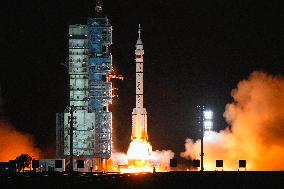
A Long March-7A carrier rocket carrying the Shijian-29A and Shijian-29B satellites blasts off from the Wenchang Space Launch Site in south China's Hainan Province, Dec. 31, 2025. Launched at 6:40 a.m. (Beijing Time), the satellites have entered the preset orbit successfully. Photo by Pu Xiaoxu/Xinhua/ABACAPRESS.COM

  •  
Satellite Launch Success in Wenchang - China

Satellite Launch Success in Wenchang - China

A Long March-7A carrier rocket carrying the Shijian-29A and Shijian-29B satellites blasts off from the Wenchang Space Launch Site in south China's Hainan Province, Dec. 31, 2025. Launched at 6:40 a.m. (Beijing Time), the satellites have entered the preset orbit successfully. Photo by Pu Xiaoxu/Xinhua/ABACAPRESS.COM

  •  
Satellite Launch Success in Wenchang - China

Satellite Launch Success in Wenchang - China

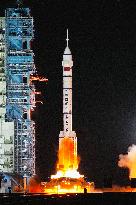
A Long March-7A carrier rocket carrying the Shijian-29A and Shijian-29B satellites blasts off from the Wenchang Space Launch Site in south China's Hainan Province, Dec. 31, 2025. Launched at 6:40 a.m. (Beijing Time), the satellites have entered the preset orbit successfully. Photo by Du Xinxin/Xinhua/ABACAPRESS.COM

  •  
Satellite Launch Success in Wenchang - China

Satellite Launch Success in Wenchang - China

A Long March-7A carrier rocket carrying the Shijian-29A and Shijian-29B satellites blasts off from the Wenchang Space Launch Site in south China's Hainan Province, Dec. 31, 2025. Launched at 6:40 a.m. (Beijing Time), the satellites have entered the preset orbit successfully. Photo by Du Xinxin/Xinhua/ABACAPRESS.COM

  •  
Long March-4B Rocket Launches Tianhui-7 Satellite - Jiuquan

Long March-4B Rocket Launches Tianhui-7 Satellite - Jiuquan

A Long March-4B rocket carrying the Tianhui-7 satellite blasts off from the Jiuquan Satellite Launch Center in northwest China, Dec. 30, 2025. The satellite, launched at 12:12 p.m. (Beijing time), has entered the preset orbit successfully, according to the center. It will be primarily used for tasks such as geographic mapping, land resource surveys, and scientific research. Photo by Wang Jiangbo/Xinhua/ABACAPRESS.COM

  • Main
  • Top
  • Editorial
  • Creative
  • About Us
  • About ILG
  • Terms of use
  • Company
  • BEHIND
  • Price List
  • Single Plan
  • Monthly Plan
  • Services
  • Shooting
  • Rights Clearance
  • Support
  • FAQ
  • How To Buy
  • Contact Us
  • Become a Partner

© KYODO NEWS IMAGES INC

All Rights Reserved.

  • Editorial
  • Olympics
  • News
  • Sports
  • Japan
  • Tech
  • Royal
  • Disaster
  • NorthKorea
  • Old Japan
  • SNS
  • Creative
  • Food
  • Japan
  • Landscape
  • Animal
  • Popular
  • #Ukraine
  • #Thailand
  • #coronavirus
  • #N. Korea
  • #China
  • #Russia
  • #Ukraine
  • #Thailand
  • #coronavirus
  • #N. Korea
  • #China
  • #Russia
  • Food
  • Japan
  • Landscape
  • Animal
  • Olympics
  • News
  • Sports
  • Japan
  • Tech
  • Royal
  • Disaster
  • NorthKorea
  • Old Japan
  • SNS